Suraksha-AI
Machine learning model predicting situational safety risk scores for women security
Suraksha-AI
Machine learning model predicting situational safety risk scores for women security
How It Connects
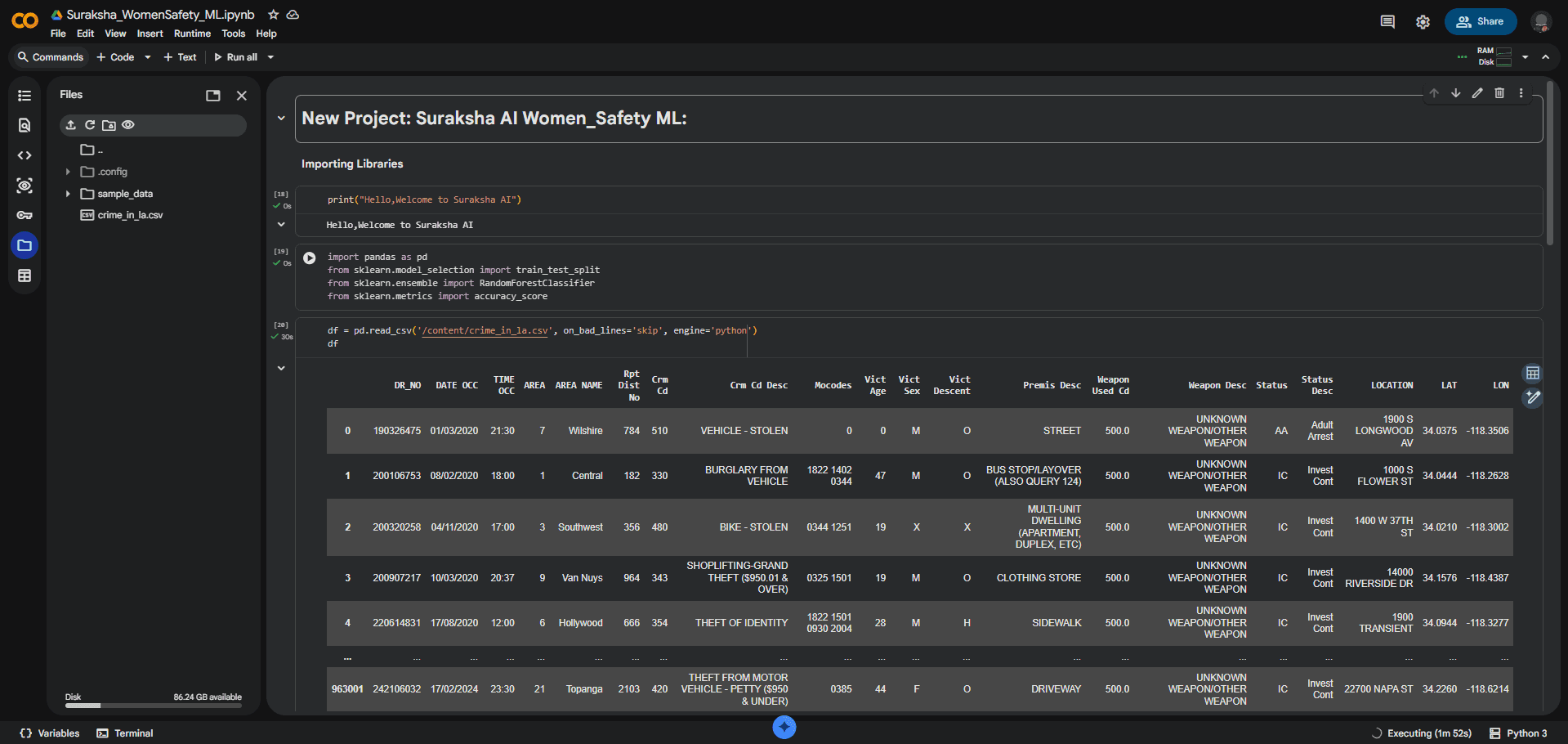
Suraksha-AI is an environmental risk-assessment project developed using Python and Scikit-learn. It processes situational parameters (time of day, lighting conditions, ambient crowd density, transit proximity, and historical safety incidents) through classification models to compute real-time safety risk scores and recommend preventative actions.
System Components
How It Works
Parameter Ingestion
Captures location, ambient time, crowd level, and travel mode.
Risk Level Prediction
Evaluates parameters against historical safety matrices.
Parameter Ingestion
Captures location, ambient time, crowd level, and travel mode.
Risk Level Prediction
Evaluates parameters against historical safety matrices.
Technical Breakdown
Granular architectural layers, runtime dependencies, and audited production decisions.
- Python analytical environment with Scikit-learncopy
Engineering Tradeoffs & Key Decisions
Why this architecture over alternativesFeature Importance Transparency
Used tree-based feature importance ranking.
Identified that lighting and proximity to transit hubs have the highest predictive weight in situational safety.